Print Recipe
These Banana Oat Muffins are mixed in one bowl, so prep and cleanup couldn’t be easier. They’re made with simple ingredients, including whole wheat flour and oats for added fiber and hearty texture. With naturally sweet, overripe bananas, a bit of cinnamon, and a splash of vanilla, these healthier (and every bit as delicious) muffins are filled with comforting flavors the entire family will love.

This is the quintessential muffin recipe for busy people. Simple ingredients, even simpler preparation. Just mix together the ingredients in one bowl, and bake.
They might not teach this “one bowl” method in culinary school (most pros recommend mixing the wet and dry ingredients in separate bowls to limit gluten production), but this simplified method gets the job done. The muffins come out delicious, and cleanup is easy.
It’s the type of shortcut I make all of the time as a busy mom feeding my family in real life. There’s no need to overcomplicate things!
For breakfast, I recommend pairing these banana oat muffins with a higher-protein option, like a hard boiled egg, Greek yogurt, a veggie frittata, or white bean and avocado toast. They make a tasty, grab-and-go snack, too. Try spreading butter or your favorite nut butter on top for a little extra staying power!
Jump to:
- Ingredients
- Instructions
- Substitutions
- Variations
- Equipment
- Storage
- Top tip
- FAQ
- Pairing
- Related
 Recipe
Ingredients
These banana muffins are made with simple ingredients that are probably in your kitchen already. It’s the type of recipe you can make whenever the mood strikes, without an extra trip to the store.
Mixing whole wheat flour and oats into the batter gives these muffins a some extra fiber, which makes them more hearty and filling. Fats from the olive oil and whole milk provide rich flavor and a tender crumb.
Sweet, overripe bananas, cinnamon, and vanilla bring on the flavor.

Grocery list:
- Bananas (look for ripe bananas in the discounted produce section.)
- Egg
- Whole milk
- Sugar
- Olive oil
- Vanilla extract
- All purpose flour
- Whole wheat flour
- Oats
- Baking powder
- Ground cinnamon
- Salt
Optional add-ins:
- chopped nuts (such as walnuts or pecans) or chocolate chips
See the recipe card at the end of this post for ingredient quantities.
Instructions
Here’s a basic summary of how to make these one-bowl muffins.

Mash the banana and egg together. Add the other wet ingredients and mix.

Pour the dry ingredients on top and then stir the batter until just mixed.

Transfer the batter to a muffin pan and bake.

Cool on a wire rack.
Hint: Make sure your baking powder is fresh! Once opened, baking powder should be used within three months. Using expired baking powder will lead to muffins that don’t rise.
Substitutions
A few suggestions for ingredient swaps:
- Dairy free: Substitute unsweetened dairy-free milk alternative for whole milk.
- Vegan: Use dairy-free milk alternative instead of whole milk and substitute a flax egg for the egg.
- Gluten free: use 2 ½ cups 1:1 gluten-free flour instead of the all purpose flour and whole wheat flour.
- 100% whole grain: Use 2 ½ cups whole wheat flour and omit the all purpose flour. The texture will be denser and heartier.
- Oil: Substitute another liquid vegetable oil, such as grapeseed oil or avocado oil, or use melted butter instead of olive oil.
Variations
Make it your own:
- Nuts: fold ½ cup chopped walnuts or pecans into the batter.
- Chocolate chips: fold in ½ cup chocolate chips.
Try my Double Chocolate Pumpkin Muffins for another option!

Equipment
- Muffin pan: Use a standard, 12-cup muffin tin.
- Muffin liners: Paper or reusable silicone liners work well. If you don’t have liners, be sure to grease the muffin tin with oil or melted butter before adding the batter.
- Large mixing bowl: to mix the batter
- Oven: for baking the muffins.
- Wire cooling rack: Place the baked muffins on a wire rack to cool. If you don’t have a rack, take the muffins out of the pan after five minutes and cool directly on the counter instead.
Storage
Muffins are a great breakfast/snack option to prep ahead of time. When making ahead, be sure to allow the muffins to cool completely. Then store them in an airtight container at room temperature for up to four days.
Muffins can also be stored in a freezer bag and frozen for up to three months. Thaw frozen muffins completely at room temperature or microwave from frozen for about 30 seconds per muffin.

Top tip
Don’t over-mix the muffin batter! Over-mixed batter will lead to muffins that are tough. Stir just until the dry flour is no longer visible.
FAQ
Bananas should be covered in brown (or even black) spots and have a strong aroma to be used in baking recipes, like muffins. Overripe bananas give muffins more flavor.
Whole milk is a great option for muffins, because it has a higher fat content. This fat gives muffins rich flavor and tender crumb.
Pairing
These are my favorite things to have with banana muffins:
-
Vanilla Matcha Latte
-
Mushroom Goat Cheese Frittata
-
Berry Coconut Water Smoothie
-
Sweet Potato Breakfast Bowl


Related
Looking for more healthy breakfast recipes? Try these:
-
Double Chocolate Muffins with Pumpkin and Chocolate Chips
-
Easy No-Bake Homemade Energy Bars with Oats
-
Overnight Mango Banana Chia Pudding with Coconut Milk
-
Yogurt Toast with 3 Topping Ideas


Recipe

One-Bowl Banana Oat Muffins
Pin
Save Saved!
Rate
Equipment
-
Muffin pan
-
Muffin liners optional
-
Large mixing bowl
-
Oven
-
Wire cooling rack optional
Ingredients
- 3 large overripe bananas
- 1 egg
- ¾ cup whole milk
- ½ cup sugar
- ¼ cup olive oil
- 1 teaspoon vanilla extract
- 1 ¼ cup all purpose flour
- 1 ¼ cup whole wheat flour
- ½ cup oats
- 2 teaspoons baking powder
- 1 teaspoon ground cinnamon
- 1 teaspoon salt
Optional add-ins:
- ½ cup chopped nuts such as walnuts or pecans or chocolate chips
Instructions
-
Preheat oven to 375 degrees Fahrenheit and line a muffin pan with liners. (If you aren’t using liners, lightly grease the muffin pan instead.)
-
Mash bananas and egg in a large bowl until uniform (it’s okay if there are still lumps). Add milk, sugar, oil, and vanilla and stir until combined. Add all purpose flour, whole wheat flour, oats, baking powder, cinnamon, and salt, and stir until just combined. Do not over-mix. Fold in nuts or chocolate chips if using.
-
Pour batter into muffin pan, filling each cup about ⅞ full. Transfer to the oven and bake 22 minutes, or until an inserted toothpick comes out clean. Allow to cool in the pan for 5 minutes, and then transfer muffins to a wire cooling rack to cool completely.
Notes
- Storage and making ahead: Allow muffins to cool completely and store in an airtight container at room temperature for up to 4 days.
- Freezing: Store in a freezer bag for up to 3 months. Thaw frozen muffins completely at room temperature or microwave from frozen for about 30 seconds per muffin.
- Dairy free: Substitute unsweetened dairy-free milk alternative for whole milk.
- Vegan: Use dairy-free milk alternative instead of whole milk and substitute a flax egg for the egg.
- Gluten free: use 2 ½ cups 1:1 gluten-free flour instead of the all purpose flour and whole wheat flour.
- 100% whole grain: Use 2 ½ cups whole wheat flour and omit the all purpose flour. The texture will be denser and heartier.
- Nutrition facts are estimates only and do not include optional add-ins.
- This recipe was originally published in 2018 and has been updated.
Nutrition
If you have a self-proclaimed sweet tooth, you aren’t alone. Many people crave cookies, cakes, and even coffee as it makes food taste good and brightens their mood. Much of the time, sugar cravings are your body’s way of telling you that you need energy—especially because sugar is your body’s preferred fuel source and an essential nutrient for daily activities.
While it’s true that your body needs sugar—and it certainly has its health benefits—too much of the sweet stuff may contribute to health problems. To find out what happens to your body when you eat sugar every day—including when it is too much—we asked registered dietitians for their sweet insights.
What Is Sugar?
There are two types of sugars—natural and added. Naturally occurring sugars are found in many of the foods you eat, including fruits, vegetables, and dairy products. Added sugars are sugars and other caloric sweeteners that are not naturally occurring in food, such as honey, maple syrup, corn syrup, and molasses.
“When we eat sugar, we have digestive enzymes in our system that break it down into glucose, which is the form our cells need for energy,” says Danielle VenHuizen, MS, RDN, a registered dietitian with Food Sense Nutrition Counseling. “We even have enzymes in our saliva that start breaking down sugar and other carbohydrates immediately, causing them to be rapidly absorbed into the bloodstream.”
When your blood sugar levels rise, a hormone called insulin is released from your pancreas, which is responsible for transporting the glucose from your blood into cells so it can used for energy production, says Justine Chan, MHSc, RD, CDE, a registered dietitian with Your Diabetes Dietitian. “Sugar also gets stored as glycogen in your muscles and liver for future use as energy.”
Although your body needs sugar to survive, when sugar is absorbed quickly by the body, this can cause steep spikes in glucose and insulin, which can contribute to health problems over time—especially if the glucose spikes stay high for a prolonged period. Extra glucose that your body doesn’t use is stored by the liver and muscle to be used until you need it. Storage of glucose is important, but too much stored can contribute to fatty tissue and fatty liver.
Benefits of Eating Sugar
The benefits of eating sugar include providing your body with fuel, improving mood, and promoting better skin. Here’s more on these benefits.
Gives You Energy
When sugar is broken down in your body, it produces glucose which is turned into instant energy for your cells and muscles. Sugar is your body’s preferred source of fuel and without enough, you may feel tired, fatigued, and even have brain fog.
When you are hungry, or in the fasted state, stored glucose in the liver is released through a process called glycogenolysis and gluconeogenesis to give your muscles a steady stream of fuel and keep your blood sugar stable. When you eat, the hormone insulin stimulates a process called glycolysis to break down the sugar you eat into energy. Your body requires a constant supply of glucose, which is why it is important to eat various sources of carbohydrates every few hours.
“Glucose is your brain’s main fuel,” says Chan. “Without sugar, you may have trouble focusing and remembering things.”
Improves Mood
It’s no secret that sugar makes us happy—and some people even crave it regularly. When sugar is eaten, the neurotransmitter dopamine, which is responsible for pleasurable reward and motivation, is released in the brain. The drive to eat sugar and sweet foods is largely controlled by the dopamine system, which is why you may notice a change in your mood when you eat something sweet.
“The key is moderation, though, as too much sugar can end up having the opposite effect,” VenHuizen adds.
Provides Nutrients From Natural Sources
Natural food sources of sugar and carbohydrates are packed with important nutrients for the body. For instance, fruits and vegetables are sources of carbohydrates that are rich in vitamins, minerals, antioxidants, and fiber.
Meanwhile, lactose is a natural sugar found in dairy products. Milk, cheese, and yogurt are excellent sources of calcium, vitamin D, phosphorus, and magnesium. Additionally, grains, such as quinoa, whole wheat bread, pasta, farro, and barley, are all good sources of fiber and B vitamins and contain some naturally occurring sugar.
Risks and Considerations
While sugar is an essential part of everyone’s diet, there are downsides and potential health risks of eating too much. The U.S. Dietary Guidelines for Americans recommends consuming less than 10% of your calories as added sugar. There are 4 calories in every gram of sugar, so that’s 50 grams per day based on a 2,000-calorie daily diet.
Causes Fatigue
Eating large amounts of refined carbohydrates and added sugar leads to a steep rise in blood sugar, followed by an energy crash. You may feel sluggish and fatigued. However, pairing sugary foods with protein-rich foods such as Greek yogurt, nuts, and eggs helps stabilize blood sugars and contribute to sustained energy. For example, if you enjoy having a cookie in the afternoon, consider pairing it with a handful of almonds, so you’re getting some protein, fiber, and healthy fat, too.
Linked to Chronic Disease
Eating added sugar in excess has also been linked to a higher risk of chronic diseases, such as cardiovascular disease, type 2 diabetes, non-alcoholic fatty liver disease, and cognitive decline. Excess added sugar increases inflammation and oxidative stress in the body, which can damage organs and tissues. It can also lead to insulin resistance, which contributes to prolonged high blood sugar. Over time, high blood sugar can cause damage to nerves, the heart, and small blood vessels in the eyes and kidneys.
“For those with diabetes or other metabolic diseases, even moderate amounts of sugar may be too much, so working with a practitioner to balance the diet is important,” VenHuizen says.
Can Be Addictive
Another consideration when eating sugar is the emotional aspect of turning to sweets when stressed or anxious. There is a natural inclination to do this because sugar releases soothing chemicals in the brain. The problem with this is that the feel-good effect is temporary and, once it wears off, can lead to consuming more sugar.
While eating sweets can be one way to cope with stress, it is important to also find other non-food coping mechanisms for stress, anxiety, and depression to prevent self-medication with sweets.
Tailoring Sugar Intake to Your Goal
There is no recommended amount of sugar to consume daily, but eating enough from natural sources is necessary for maintaining adequate energy levels and keeping blood sugar stable throughout the day. Including a carbohydrate source at every meal along with a source of protein and fat can help ensure you are eating enough sugar in a balanced way.
“Unless, in a situation where quick energy is needed, such as for athletes, sugar should be combined with other foods that have protein, fiber, and healthy fats,” advises VenHuizen.
Combining carbohydrates with proteins and fats helps keep blood sugar stable and prevents extreme spikes in blood sugar that then lead to crashes. Chan recommends starting by evaluating the sugar content in your beverages. If you need guidance balancing your diet or would like a better understanding of how sugar impacts your body, consult a registered dietitian.
]]>Whether you are an occasional social drinker or enjoy a glass of wine daily, you may be curious about the effects of alcohol. According to the National Survey on Drug Use and Health, 78.3% of Americans reported that they have consumed alcohol at some point in their life.
But what does alcohol do to your body, and what impact does consumption have on a person’s health? We asked registered dietitians to weigh in on the facts and research. Read on to discover what constitutes moderate drinking, the potential benefits of drinking alcohol, as well as the risks associated with alcohol consumption.
What Is Alcohol?
Alcohol is produced by the fermentation of yeast, sugars, and starches and has an effect on every organ in the body. When you drink alcohol, it is rapidly absorbed from the stomach and small intestine into the bloodstream and metabolized by the liver. Because the liver can only metabolize a small amount at a time, excess alcohol circulates throughout the body.
Alcohol is considered a nutrient with seven calories per gram. But unlike carbohydrates, proteins, and fats, it cannot be stored and used for energy. Instead, alcohol stays in the bloodstream until it is eliminated, which places a large burden on the liver to metabolize it and remove it from your body.
Drinking too much alcohol, or more than recommended limits per week, can cause health problems over time. Experts recommend that men limit their intake to two drinks or less in a day and that women drink only one drink or less in a day. To put that into perspective, one standard serving of alcohol is defined as 12 ounces of beer, 5 ounces of wine, or 1.5 ounces of distilled spirits, like tequila and vodka.
Benefits of Drinking Alcohol
Research shows moderate drinking may reduce the risk of cardiovascular disease, diabetes, stroke, and high blood pressure. It also can be a source of some nutrients, and stress reduction. But, these benefits are completely individualized and are largely based on your genetics, diet, exercise patterns, and overall well-being. Here’s more on the potential benefits of drinking alcohol.
May Protect Against Cardiovascular Disease
Light to moderate alcohol intake may have a protective effect against heart disease and stroke. There also is some evidence that moderate alcohol consumption might help to slightly raise HDL, or “good” cholesterol.
Additionally, research on resveratrol in red wine has been extensively studied for its antioxidants that might protect the heart, says Andrew Akhaphong, MS, RD, LD, a registered dietitian for Mackenthun’s Fine Foods. “Studies show that certain types of alcohol may provide a high source of phytochemicals and anti-inflammatory effects. Anti-inflammatory benefits include improved blood pressure and reduced insulin resistance.”
May Provide Vitamins, Minerals, and Antioxidants
Drinking alcohol in moderation can be a source of some nutrients. According to Lori FitzPatrick, MS, RD, founder and owner of Nutrition on Top, LLC, beer contains B vitamins, minerals, antioxidants from malt and hops, and even probiotics in some instances.
Beer also contains more protein and B vitamins than wine and they both contain equivalent amounts of antioxidants, but the specific types of antioxidants differ. Beer also is a good source of selenium and potassium.
Still, you should not rely on alcohol as a primary source of nutrients as it won’t provide enough of each nutrient to meet your needs. Whole foods ultimately are better sources of nutrients without the added risks of alcohol. For instance, drinking excess alcohol can impair nutrient absorption and metabolism of vitamins. Common deficiencies of heavy drinkers include vitamin A, C, D, E, K, and B vitamins.
May Help Decrease Stress
Beyond physical health, low to moderate alcohol consumption has been associated with positive self-perceived mental and socio-emotional health, says FitzPatrick. “Stress reduction and social integration are two possible explanations. Drinking alcohol has been shown to reduce stress signaling in the brain.”
In a secondary data analysis of 33,185 individuals, researchers observed that compared to abstainers, occasional and moderate beer drinkers had better mental health and social support compared to former drinkers who displayed worse indicators of self-perceived mental and physical health.
Still, it is important to ensure that drinking alcohol is not your only method of reducing stress. Having multiple tools to minimize stress and anxiety is necessary for good mental health.
May Facilitate Social Connection
In addition to stress reduction, research has also shown that alcohol helps facilitate social connection and bonding, especially among groups of unfamiliar people. Sharing a drink with someone you don’t know very well may help you find some common ground.
Research also shows that drinking alcohol produces a neuropeptide called beta-endorphins in specific areas of your brain. When beta-endorphins are produced, they have a pain management-like effect and make you feel relaxed. They also are shown to interact with your internal reward system, which is responsible for positive emotions.
However, the alcohol dose matters. Frequent binge drinking is known to contribute to poor mental health, and withdrawing from alcohol can increase feelings of anxiety. It is important to ensure you stay within recommended limits to reap the benefits.
Risks and Considerations
Drinking alcohol, even at low and moderate amounts, comes with a number of risks. Drinking too much alcohol is associated with poor cardiovascular health and any potential benefits are shown to not outweigh the increased risk of cancer that drinking alcohol poses.
Alcohol also is a major contributor to alcoholic liver disease and can promote liver inflammation, says FitzPatrick. “When you drink alcohol, your liver prioritizes alcohol metabolism over normal functions like maintaining blood sugar levels, so craving carbohydrates may be your body’s way of telling you that your blood sugar is low.”
Chronic heavy drinking can also cause intestinal inflammation and leaky gut, which can contribute to additional inflammation in the gastrointestinal tract, liver, and brain.
There are also some individuals who should consider avoiding alcohol completely. If you are pregnant, it is safest to avoid alcohol as there is no dose of alcohol that has been determined safe for the developing fetus. If you are breastfeeding, speak with a healthcare provider about the individual guidelines and decisions best for you.
Further, people with the genetic mutation of the gene ALDH2*2 have an impaired ability to metabolize alcohol and eliminate its byproduct, acetaldehyde. They also demonstrate alcohol toxicity signs such as slurred speech, impaired mobility, and increased likelihood of vomiting and dehydration faster than the average person. This condition also places someone at a higher risk for esophageal cancer.
If you or a loved one are struggling with substance use or addiction, contact the Substance Abuse and Mental Health Services Administration (SAMHSA) National Helpline at 1-800-662-4357 for information on support and treatment facilities in your area.
Tailoring Alcohol To Your Goal
While alcohol is not a substance that is needed as part of a nutritious diet, there are many ways to include alcohol in your life in moderation if it is something you enjoy or want to partake in the social aspect of it. Just try to avoid an all-or-nothing approach when it comes to alcohol.
If you are looking to decrease your alcohol intake, gradually do so over time. This approach will be more sustainable and better for your health than cycling between drinking too much and being sober. One way to do that is through the use of mindful and intuitive drinking.
“The principles of mindful and intuitive eating can and should be applied to drinking alcohol,” says FitzPatrick. “This practice involves limiting distractions, engaging your senses, paying attention to what you are drinking, how and why you are drinking it, and how it makes you feel.”
FitzPatrick says that being in tune with your unique preferences and how alcohol impacts you also can help you feel more satisfied drinking less. It also helps ensure your choices are more aligned with your goals.
If you are struggling to know how much you should drink, use a standard drink calculator. Keep in mind that some craft beers contain twice the amount of alcohol as a standard brew (5%). So even if you consume a single 16-ounce pour, you end up drinking more than one serving of beer.
Bottom Line
Alcohol includes some benefits for your health when you drink in moderation, such as decreased risk of cardiovascular disease and stroke and reduced stress and anxiety. Relying too heavily on alcohol or drinking it excessively, though, can contribute to significant health problems including liver disease, cancer, and cardiovascular problems. Speak with your healthcare provider for individual recommendations or if you are concerned about your alcohol usage.
]]>Fiber is good for your gut, helps with weight management, and may even offer some protection against chronic diseases. But are you getting enough fiber in your diet? Most likely not. Experts estimate that 95% of Americans fail to meet their daily fiber needs—or 28 grams for a 2,000-calorie diet.
If you’re like most people and do not get enough fiber, you may consider adding a fiber supplement to your daily diet. Fiber supplements are likely safe for most people and may benefit those unable to meet their dietary fiber needs because of health issues or the need to follow a special diet, though for some they can cause unwanted side effects.
“Fiber supplements can be a great option for folks that struggle getting enough daily fiber through dietary sources alone,” says Jordan Hill, MCD, RD, CSSD, a lead registered dietitian at Top Nutrition Coaching, “Getting fiber from food sources first should be the goal, and then implement fiber supplements.”
Here, you’ll learn about fiber supplements, the potential benefits and risks of taking these supplements every day, and things you need to consider when adding fiber supplements to your routine.
What Is a Fiber Supplement?
Fiber supplements are capsules, pills, powders, and gummies that contain an isolated fiber, which is fiber that’s been extracted and isolated from whole foods without any other nutrients. The type of isolated fiber in these dietary supplements varies. Some supplements contain natural fibers like psyllium, inulin, or beta-glucan, while others have synthetic fibers like polydextrose or methylcellulose.
Because not all isolated fibers affect the body in the same way, it is important to consider the type of fiber in the supplement. Fiber supplements that contain psyllium, for example, work better at alleviating constipation than fiber supplements with inulin. Talk to a healthcare provider about which version is best for you.
Benefits of Taking a Fiber Supplement
Taking fiber supplements promotes digestive health and heart health. They can even be a tool in weight management.
“We know fiber is good for the body,” says Kimberly Snodgrass, RDN, LD, FAND, spokesperson for the Academy of Nutrition and Dietetics (AND), “and daily consumption of fiber supplements appears to be safe.”
Let’s take a closer look at some potential benefits of taking fiber supplements daily.
Improves Digestive Health
Healthcare providers recommend fiber supplements with psyllium to alleviate constipation and improve bowel regularity. Psyllium is a type of fiber that holds onto water in the digestive tract, making stool softer and easier to pass. Compared to other isolated fibers, psyllium is the best at improving bowel movements in people with chronic constipation.
The bowel benefits of fiber supplements, specifically psyllium, aren’t limited to alleviating constipation, though. The water-holding abilities of psyllium also slow down diarrhea and may help those experiencing loose stools from noninfectious conditions like irritable bowel syndrome (IBS) become more regular.
Taking fiber supplements may also influence the makeup of your gut’s microbiota, according to a study published in the International Journal of Molecular Sciences. This small study found that supplementing with psyllium fiber had a significant effect on stool microbiota composition, especially in participants suffering from constipation.
Researchers have only started to learn about the benefits of fiber in the gut microbiome but suggest that the makeup of your gut’s microorganisms may influence your physical and emotional health. Taking fiber supplements may improve the composition of your microbiome, benefitting your gut and your overall health.
Lowers Blood Cholesterol
Cholesterol is a type of fat made in your liver. Your body uses cholesterol to make cell membranes, hormones, and vitamin D. If you have too much cholesterol in your blood, it combines with minerals and other substances to form plaque, leading to narrowing and blockage in blood vessels that affect the flow of blood, a medical condition called atherosclerosis.
But fiber can boost heart health by lowering LDL cholesterol levels and reducing the risk of heart disease, says Hill. Supplementing with certain types of fiber—psyllium and β-glucan—lowers cholesterol by trapping bile in the digestive tract and eliminating it in your stool.
Bile is a substance that helps digest fat and is made up of cholesterol. By grabbing onto the bile, fiber prevents reabsorption of the cholesterol, helping to lower blood cholesterol numbers.
Helps Maintain Blood Sugar Levels
Sugar, or glucose, is the main source of fuel for your cells. When blood levels drop, your body sends out the hunger hormones telling you it’s time to eat. But fiber helps keep blood sugar levels steady by slowing down digestion, especially since it is a non-digestible carbohydrate. Maintaining blood sugar levels keeps energy stable and helps with hunger control.
For this reason, the same gel-forming fiber supplements that help lower cholesterol may also benefit people with type 2 diabetes. Supplementing with these fibers improves fasting blood glucose and insulin levels as well as hemoglobin A1C. These supplements work so well, that experts have suggested including them in the management protocol for people with type 2 diabetes.
May Support Weight Management
Fiber may also support weight management by helping you feel full and avoid overeating, says Snodgrass. Research suggests that dietary fiber may help with weight management by protecting against overweight and obesity. However, the evidence to support the benefits of fiber supplements on weight loss and weight management is mixed.
According to a review published in The American Journal of Clinical Nutrition, fiber supplements may improve body composition and promote small amounts of weight loss. However, the authors of the review study note that the variation in the studies makes it hard to draw strong conclusions about the benefits of fiber supplements for weight management.
Risks and Considerations
Taking a fiber supplement daily is likely safe for most people. However, there are some risks and considerations you need to consider before making dietary supplements part of your routine.
For instance, fiber supplements may affect the absorption of medications like antidepressants and oral medications for type 2 diabetes, making them less effective. If you take prescription medications, talk to a healthcare provider or pharmacist about potential interactions.
“Consuming too much fiber, whether from food or supplements, also may cause digestive issues,” says Hill. “Excess fiber intake may lead to digestive discomfort like gas, bloating, diarrhea, or intestinal blockage.”
These side effects are something you need to think about when adding fiber supplements, especially when using them to improve digestive health. Getting guidance from a healthcare professional about how to use fiber supplements may prevent these uncomfortable symptoms.
Additionally, dietary supplements aren’t regulated by the Food and Drug Administration (FDA). It’s up to the maker of the product to ensure their supplement is safe and contains the ingredients listed on the label.
There are independent organizations that do quality testing of dietary supplements, including ConsumerLab.com and NSF International. Supplements marked with a seal of quality assurance from these organizations mean the product contains the ingredients listed on the label. For safety and quality, look for fiber supplements with a third-party testing label.
Determining Your Needs
Fiber needs vary and depend on your age, sex, and activity level. Consult with a healthcare provider or a registered dietitian to find out how much fiber you need a day. They can also help you find the right supplement that best fits your needs and goals.
Jordan Hill, MCD, RD, CSSD
Choosing the right fiber supplement is important as the type of fiber in the supplement can have different effects on the body.
“Choosing the right fiber supplement is important as the type of fiber in the supplement can have different effects on the body,” explains Hill.
When adding fiber to your diet, go slow. Adding too much too fast can cause gas, bloating, and constipation. Also, increase your fluid intake with your extra fiber to help keep things moving through the gut.
Taking a fiber supplement daily may not be harmful to most people and may provide some benefits. But you can’t bottle the good nutrition found in foods that are naturally rich in fiber, like fruits, vegetables, whole grains, and legumes. Fiber supplements should complement your diet, not replace nutrient-rich foods.
]]>
This lemon cheesecake in a glass is the perfect individual treat are quick and easy to make in under 15 minutes. This is a simple cheesecake cup that’s fresh and creamy, tangy and fruity.

Recipe Highlights
- Easier than a traditional cheesecake recipe
- Make in under 15 minutes and No oven required!
- Use mason jars or any cute glasses you already have
- Its perfect for date night and special occasions as it serves 2
- Its only 5 ingredients
- 2 perfect mini lemon cheesecakes full of fresh lemon flavor
- No Food Processor Needed!
I make this sugar-free lemon cheesecake in a glass regularly because it’s a guilt-free and refreshing treat that satisfies my sweet tooth without the added sugar.
Check out this Chocolate Cheesecake in a Jar with Blueberries for something different.
Ingredient Notes
Cheesecake Base Layer: Typically cheesecakes in a glass would be made with graham crackers crumbled in the base of the glass, however to keep this recipe lower in sugar, I I used sugar free digestives. Substitute with any plain sugar free cookies or sugar free shortbread.
Cream Cheese: Full-fat cream cheese will yield a better result due to its higher fat content, however to keep it on the lighter side, you can substitute with low fat.
Butter: This is used in the crumb base to create a wet sand texture, similar to traditional cheesecake bases
Low Carb Sweetener: I love using monkfruit powdered sweetener as it blends in extremely well to the softened cream cheese and provides sweetness without the grittiness, and without the added calories of regular sugar.
Lemon: This recipe definitely needs fresh lemons and lemon zest.
Looking for more lemon desserts? Check out these Mini Lemon Cheesecake Bites and these No Bake Lime Cheesecake Balls.
How To Make
Step 1. Make Base by crushing digestives or other sugar free cookie in a ziplock bag with rolling pin or can. Then, add to a large bowl with melted butter, mix together until is resembles wet sand. Divide equally between two glasses.


Step 2. Make cream cheese mixture. Add softened cream cheese into a large mixing bowl with lemon juice, lemon zest and powdered sweetener. Use an electric mixer on medium speed to blend ingredients together until creamy and smooth.

Step 3. Assemble: Add cheesecake mixture on top of base layer and top with fresh berries or your choice of fruits.
Recipe Tips
- Choose the Right Sweetener: make sure to use a low carb powdered sweetener, not granulated otherwise there may be a grainy texture to the cheesecake batter.
- Zest for Flavor: Incorporate lemon zest into the cheesecake mixture for an extra burst of citrus flavor.
- Chill Well: For the best texture and flavor, allow the cheesecake to chill in the refrigerator for a few hours or overnight. This helps it set and develop a more mousse-like consistency.

FAQ’s
This dessert is best eaten within 2 days
Yes it will work just fine with light cream cheese, however it won’t be as rich.
I wouldn’t recommend it as it may turn soft and gooey in some places and remain firm in others. The best option, is to set the cream cheese out on a bench and hour before you need it to let it soften naturally.

Dessert cups are a fun way to eat cheesecake. They don’t take long to make, and you wont be left with a whole cheesecake on your hands when you only wanted a single serving which makes it great for portion control. Not to mention this is a perfect date night dessert.
More Cheesecake Recipes:
- No Bake Passionfruit Cheesecake
- Lemon and Lime Citrus Cheesecake
- No Bake Chocolate Tart
- No Bake Chocolate Cheesecake
- Sugar Free Chocolate Panna Cotta
- Easy No Bake Lime Cheesecake
- All Creamy Desserts!

Sugar Free Lemon Cheesecake In A Glass

Ingredients
Base:
- 4 No Added Sugar Digestives Biscuits
- 1 tablespoon butter, melted
Filling
- ½ cup Cream cheese, softened to room temp
- 2 tablespoons Low carb powdered sweetener
- 2 tablespoons Lemon Juice
- Zest of 1 lemon
Fruits
- ¼ cup fresh blueberries
Instructions
-
Make Base by crushing digestives or other sugar free cookie in a ziplock bag with rolling pin or can. Then, add to a large bowl with melted butter, mix together until it resembles wet sand. Divide equally between two glasses.4 No Added Sugar Digestives Biscuits, 1 tablespoon butter, melted
-
Make cream cheese mixture. Add softened cream cheese into a large mixing bowl with lemon juice, lemon zest and powdered sweetener. Use an electric mixer on medium speed to blend ingredients together until creamy and smooth.½ cup Cream cheese, softened to room temp, 2 tablespoons Low carb powdered sweetener, 2 tablespoons Lemon Juice, Zest of 1 lemon
-
Add berries and refrigerate for an hour or two, and enjoy.¼ cup fresh blueberries
Notes
Cream Cheese: Full-fat cream cheese will yield a better result due to its higher fat content, however to keep it on the lighter side, you can substitute with low fat.
Butter: This is used in the crumb base to create a wet sand texture, similar to traditional cheesecake bases
Low Carb Sweetener: I love using monkfruit powdered sweetener as it blends in extremely well to the softened cream cheese and provides sweetness without the grittiness, and without the added calories of regular sugar.
Lemon: This recipe definitely needs fresh lemons and lemon zest.
Nutrition
Note: Sugars contained in this recipe are from naturally occurring sugars in fruits, vegetables or other natural sweeteners.
]]>

Quick and easy stewed Apples with cinnamon, sweetened with Monkfruit. Perfect on top of your favorite yogurt, oats, or pancakes for breakfast, or as a dessert in the evening.

Recipe Highlights
- Simple ingredients, and a great way to use up leftover apples
- Perfect for hitting those after dinner cravings
- Sweet without added sugar
- Kid-friendly and a healthy snack
- Tastes great hot or cold
- Add to apple muffins, on top of protein pancakes, or with sugar free custard
Ingredients

Ingredient Notes
- Apples: Granny smith apples, also known as cooking apples are one of the best type of apples to use and I love them for their sharper flavor. Other apple varieties that would work just as well are Baldwin, Cameo, Cortland, Idared. These are all varieties of tart and crisp apples that hold thier shape well during cooking and baking.
- Sugar Alternative: I used classic white monkfruit sweetener which is a sgranulated sweetener that measures like sugar. Granulated stevia or any other granulated sweetener that measures like sugar could also be used.
- Spices: I like using ground cinnamon, with a little ground cloves and mixed spice. Alternatively you could use a cinnamon stick, ground ginger or even a dash of vanilla essence.
- Lime: this balances out the sweetness and tartness of the apples. Lemon juice will also work.
How To Make
Peel apples into chunks, making sure to get all the peel off from the edges
Chop apples into bite sized chunks, about 2cm x 2 cm or ½ inch squares

Add chopped apples to a pot on stove on medium heat, along with all other ingredients. (don’t use a lid on the pan)

Cook for 10 – 15 minutes or until fragrant and apples are starting to soften. (Make sure to put a timer on). Stirring every couple of minutes to ensure apples cook evenly through.

Taste apples to see if they are cooked to your liking after 12 minutes, if not cook for another couple of minutes.
Ways to Use Stewed Apples
- Breakfast: Use stewed apples as a sweet topping for oatmeal, cereal, yogurt, and pancakes.
- Desserts: Serve stewed apples as a topping for ice cream or as a filling for crepes and waffles.
- Apple Pie Filling: Prepare your favorite pie crust, and then use the stewed apples as the filling
- Meat Sides: Pair stewed apples with pork or poultry dishes as a sweet and savory side.
Storage
Storage: Before storing, let the cooked apples come to room temperature. Then place into an air tight plastic container with lid and keep in the fridge for 2 to 3 days.
Freezing: This recipe is not suitable for freezing. Its best to eat within 2 – 3 days.
Tips
- Apples cut roughly the same size will allow for more even cooking
- Lemon juice or lime juice is what prevents apples from turning brown when stewing.
- If apples are too mushy, then the heat is too high. I cook mine with the lid off on medium heat for 10 – 15 mins to get tender (not mushy) apples.

More Apple Recipes
- Sugar Free Apple Crumble
- Apple Rose Pastry
- Apple Muffins (no added sugar)

Easy Stewed Cinnamon Apples (No Sugar)
Ingredients
- 7 large Granny smith green apples – (see note 1)
- 1 tablespoon Monkfruit Sweetener (White)
- 1 tablespoon Tap water
- 1 tablespoon Lime juice
- ½ teaspoon Mixed spice
- ½ teaspoon Cinnamon
- ½ teaspoon Ground Cloves
Instructions
-
Peel apples into chunks, making sure to get all the peel off from the edges7 large Granny smith green apples
-
Chop apples into bite sized chunks, about 2cm x 2 cm or ½ inch squares
-
Add chopped apples to large pot on stove on low to medium heat, along with all other ingredients. (don’t use a lid on the pan)1 tablespoon Monkfruit Sweetener (White), 1 tablespoon Tap water, 1 tablespoon Lime juice, ½ teaspoon Mixed spice, ½ teaspoon Cinnamon, ½ teaspoon Ground Cloves
-
Cook for 10 – 15 mins until apples become tender, stirring every couple of minutes to ensure apples cook evenly through. (If the pot dries out too fast before the apples become tender, add a bit more water)
Notes
- Apples: Granny smith apples are a tart green apple commonly sold in supermarkets in Australia. Other apples that would work just a s well are Baldwin, Cameo, Cortland, Idared. These are all varieties of tart and crisp apples that hold thier shape well during cooking and baking.
- Monkfruit: I used classic white monkfruit sweetener which is a sgranulated sweetener that measures like sugar. Granulated stevia or any other granulated sweetener that measures like sugar could also be used.
- Spices: any spice combination may be used, ginger is also another popular option.
- Storage: Store apples in an air tight container in the fridge for 3 or 4 days.
- Serving: Serve with sugar free custard, or sugar free ice cream.
Nutrition
Note: Sugars contained in this recipe are from naturally occurring sugars in fruits, vegetables or other natural sweeteners.
]]>

This Ginger Loaf Cake is deliciously moist, soft and tender. It takes only 15 minutes of prep to put together and will stay moist for days. With ground ginger, grated carrot and crumbled walnuts and naturally sweetened, this is a perfect cake to have with coffee.

I love ginger and this cake was inspired by a recipe from Nigella Lawson, however I made a number of adjustments to the original recipe to replace the brown sugars and syrup with natural sweeteners which has lightened it up and put a healthy twist on it.
Why This Cake Works!
- There’re no brown sugar! Instead its sweetened with natural sweeteners.
- Simple and easy ingredients
- It makes 8 thick slices
- Its light and filling
- You can get it into the oven in 15 minutes
- No special equipment required, just a bowl and a loaf tin
Ingredients

Ingredient Notes
- Granulated Sweetener: Monkfruit Sweetener is my preferred natural sweetener for this recipe, however you could also use Natvia Stevia which is another type of granulated sweetener. Just make sure the alternative sweetener you’re using measures like sugar.
- Date Syrup: this is available in the health food aisle from Woolworths and Coles in Australia and online at Amazon. The brand I use is called “Macro Date Syrup”. Alternatively, Coconut Syrup could be used, or any unrefined syrup that has a dark thick consistency.
- Bicarb Soda: make sure to remove all lumps before adding to the bowl of dry ingredients. To remove lumps, push down on them with a spoon to squash them to a powder.
- The cake batter will look like rich caramel sauce in colour and consistency.
- Vegetable Oil: Coconut Oil, Grapseed Oil, Avocado Oil, or extra virgn Olive Oil can be substituted.
How To Make This Cake
- Preheat the oven and line the loaf tin with baking paper to prevent cake sticking.
- Prepare dry ingredients: Add flour, baking powder, bicarbonate of soda, ground ginger and salt to a large mixing bowl and mix together.
- Prepare wet ingredients: Whisk granulated sweetener, eggs , date syrup and oil in a separate bowl until combined.
- Add dry ingredients into wet ingredients: Add flour mixture into the wet mixture. Use a spatula to scrape the sides of the flour bowl, ensuring all the flour is nicely mixed into the wet ingredients.

- Add carrots and walnuts: stir through.
- Pour batter into loaf tin: smooth top with a spatula or spoon.
- Bake: for 65 minutes. (to test if cake is cooked, insert a skewer into the centre, and if it comes out clean or with a few crumbs, it’s done).
- Cool at room temperature: Leave cake in the tin to cool on a wire rack.

- Remove cake from tin: peel away baking paper.
- Eat and Enjoy: Serve a slice of this delicious ginger cake with some butter, or a little whipped cream. Or on its own.

My Top Tip
Make sure your ground ginger is still fresh, otherwise it will have lost its ginger flavour. If you’ve had a bottle sitting in your spice rack for a year, its probably too old, and I’d recommend buying a fresh bottle of ground ginger to get a nice ginger kick with this cake.
Your Questions Answered
Cake should be stored in an air tight container at room temperature and will stay fresh for 3 days.
Yes. Slice it up and pop into ziplock bags and freeze for 4 weeks.
No. I wouldn’t recommend it as fresh ginger has an entirely different taste to ground ginger, and once cooked will add a bitterness to the cake
Aside from addition ground ginger, you could also add a little ground cinnamon, ground cloves, and mixed spice, however the more “other spices” you add, the more you take away from the ginger flavour.
Instead of carrot you could use grated zucchini, or grated pumpkin.
Instead of walnuts, you could use crumbled pecans, or hazlenuts.

More Healthy Baking Recipes
- Low Carb Carrot Cake
- Sugar Free Red Velvet Cupcakes
- Healthy Date Loaf
- Coconut Yoghurt Cake with Coconut Glaze
- Dairy Free Banana Bread
- No Bake Ginger Slice
- Go to All Sugar Free Baking Recipes

Ginger Loaf Cake
Ingredients
- ¾ cup (190g) plain flour
- 1 teaspoon baking powder
- ½ teaspoon Bicarb Soda
- 4 teaspoons ground ginger
- ¼ teaspoon fine sea salt
- ⅔ cup (170g) granulated sweetener that measures like sugar – (see note 1)
- 3 tablespoons Date Syrup
- 2 large eggs – (at room temperature)
- ¾ cup + 2 tablespoons vegetable oil
- ¾ cup (190g) peeled and coarsely grated carrots
- ⅓ cup (80g) walnut pieces, roughly chopped or crumbled
Instructions
-
Preheat oven to 150 degrees C fan forced/300 degrees F. Grease and line a loaf tin with baking paper.
-
Add flour, baking powder, bicarbonate of soda, ground ginger and salt to a large mixing bowl. Mix together with a whisk until combined.
-
Whisk granulated sweetener, eggs , date syrup and oil in a separate bowl until combined.
-
Add flour mixture into the wet mixture. Use a spatula to scrape the sides of the flour bowl, ensuring all the flour is nicely mixed into the wet ingredients. (note: batter may appear a little firm at this stage, however the moisture from the carrots will loosen it up)
-
Add in the grated carrots and walnuts and mix until combined.
-
Pour batter into loaf tin, (greased and lined), smoothing the top with a spatula or spoon.
-
Bake in the oven for 65 minutes. (to test if cake is cooked, insert a skewer into the centre, and if it comes out clean or with a few crumbs, it’s done). Leave cake in the tin to cool on a wire rack.
-
Remove cake from tin once cooled to room temperature, peeling away the baking paper.
-
Cake should be stored in an air tight container at room temperature and will stay fresh for 3 days. Alternatively, slice it up and pop into ziplock bags and freeze for 4 weeks.
Notes
- Granulated Sweetener: Monkfruit Sweetener is my preferred natural sweetener for this recipe, however you could also use Natvia Stevia which is another type of granulated sweetener. Just make sure the alternative sweetener you’re using measures like sugar.
- Date Syrup: this is available in the health food aisle from Woolworths and Coles in Australia and online at Amazon. The brand I use is called “Macro Date Syrup”. Alternatively, Coconut Syrup could be used, or any unrefined syrup that has a dark thick consistency.
- Bicarb Soda: make sure to remove all lumps before adding to the bowl of dry ingredients. To remove lumps, push down on them with a spoon to squash them to a powder.
- The cake batter will look like rich caramel sauce in colour and consistency.
- Vegetable Oil: Coconut Oil, Grapseed Oil, Avocado Oil, or extra virgn Olive Oil can be substituted.
- Ground Ginger: Make sure your ground ginger is still fresh, otherwise it will have lost its ginger flavour. If you’ve had a bottle sitting in your spice rack for a year, its probably too old, and I’d recommend buying a fresh bottle of ground ginger to get a nice ginger kick with this cake.
Nutrition
Note: Sugars contained in this recipe are from naturally occurring sugars in fruits, vegetables or other natural sweeteners.
]]>

This Orange Polenta Cake is easy to make, moist, sweet and refreshing with a lovely zesty hit of orange to remind you of summer and all things fun! It’s a simple cake and perfect if you’re not into frosting, layers, and lots of filling.

Why You Should Make This cake!
- Its stays moist and won’t dry out
- It tastes like summer
- Its light, refreshing and with a soft crumb
- Its full of fibre and one slice is all you need
- There’s no added sugars or honey
- Great for those who can’t tolerate flour
I have to admit making an Orange Polenta Cake wasn’t even on my radar, until I tasted one at a café with a friend. From then I knew it was something I had to recreate and make myself. Apart from sugar free chocolate cakes, orange cakes are in my top 3 favourite baked goods!

Ingredient Notes
- Polenta: Buy a fine ground polenta as opposed to a more course one. I found the finer polenta has a nicer texture. The brand I use is “Sostanza Polenta”.
- Sweetener: any type of natural granulated sweetener that measures like sugar would work in this recipe. I used granulated stevia (Natvia Baking Blend) in this recipe, however I also love to use monkfruit sweetener in my baking recipes as well. Both granulated monkfruit and granulated stevia for baking are sold in Woolworths and Coles in Australia and online through amazon.
- Oranges: I used a large Navel orange for this recipe. Navel oranges are plump, sweet and juicy. Valencia or any other sweet juicy orange variety would be a good substitute.
- Orange Blossom Water: this is like rosewater, but made from the orange blossoms on trees. Its beautifully fragrant and full of citrus. I usually find it in the baking aisle of Woolworths or Coles. If you can’t find it, zest another orange instead.
- Cake Tin: you’ll need a 23cm/9 inch sized springform tin lined with baking paper.
- Hand Held Electric Beaters: These also help to cream the butter and sugar
What is Polenta
Polenta is finely ground corn that is commonly used in many Italian dishes. Polenta is often used in baking and cooking and works really well when paired with almond meal or almond flour to make delicious gluten free cakes and baked goods.
As this recipe contains no added sugar, it’s a healthy polenta cake you can enjoy anytime.
How To make This Recipe
- Cream Butter and Sweetener: Add the butter and sweetener to a large mixing bowl an mix with the electric beaters on medium/high until combined. (It might seem a little gritty at first, but this is normal)
- Add in Eggs/Vanilla: Once the butter and sweetener is creamed, beat in the eggs one at a time, followed by the Vanilla.

- Add the Dry Ingredients to a new bowl – add the polenta, almond meal, baking powder ground cinnamon, granulated sweetener and orange zest and mix to combine. Once these are combined, add to the wet ingredients and gently mix it all together
- Pour Batter into cake tin and cook: Spoon the batter into the lined springform tin and bake for 160 degrees C or 320 degrees F for 50 minutes
- Remove from oven and let cool: let cake cool in the tin for 5 minutes.

How To make Orange Syrup
Note that the consistency of this orange syrup is not like honey or even maple syrup. It is thinner and not really like you would expect a “syrup” to be. This is good though because it means it will easily and quickly soak into the cake and make it super moist and zesty. It also means it will stay fresher for longer and won’t dry out!
- Make Syrup: Add the syrup ingredients to a medium pot and heat on medium until the sweetener has dissolved. Then bring to the boil for around 4 to 5 minutes and remove from heat. Let it sit for 5 minutes. Syrup should be thin so that it can be absorbed into the cake easily.
- Add Syrup to Cake: Use a fine metal cake skewer to poke around a dozen holes in the top and pour over the orange syrup. At first, it might seem that the syrup is too much for the cake, don’t be alarmed. Just make sure you pour the syrup on no later than 5 minutes out of the oven so the syrup can sink in properly.
Timing is Important With This Cake
When you have 10 minutes left on the oven timer, start making the orange syrup. Its important to have the syrup ready and rested for the cake which will also need to cool for 5 minutes once out of the oven.

How Long Does Polenta Cake Keep?
Polenta cake will keep for 3 to 4 days in an air tight container in the fridge. When I make this cake, I like to slice it and freeze pieces in individual ziplock bags so they are easy to grab and go in the morning as I head out the door.
To eat, defrost to room temperature to 30 minutes, or zap in the microwave on medium heat for 20 to 25 seconds.
How To Serve
- With a little butter
- With double cream
- With Greek yoghurt
This Orange Polenta Cake is gluten free, sugar free and low carb which tends to make it a foolproof winner for birthdays, mothers day, office morning teas, brunch dates, and casual family get togethers.
More Sugar Free Cake Recipes
- Easy 6 Ingredient Healthy Orange Cake
- High Protein Oat Flour Banana Bread
- The Ultimate Sugar Free Chocolate Fudge Cake
- The Best Ever Sugar Free Low Carb Carrot Cake
- Sugar Free Red Velvet Cupcakes
- Sugar Free Vanilla Cupcakes with Frosting

Orange Polenta Cake

Ingredients
- 2 cups Almond meal
- 1 cup Unsalted butter – at room temperature, plus extra to grease
- 1 cup Granulated sweetener that measures like sugar
- 3 large Eggs, room temperature
- ½ cup Polenta
- 2 medium Oranges (Finely grated zest only)
- 1 teaspoon Baking powder
- 1 teaspoon Orange blossom water
- 1 teaspoon vanilla essence
- ½ teaspoon Ground cinnamon
SYRUP
- ¼ cup orange juice
- 2 tablespoons Granulated sweetener that measures like sugar
- 1 teaspoon orange blossom water
- 2 cardamom pods, – crushed
Instructions
Cake
-
Cream Butter and Sweetener: Add the butter and sweetener to a large mixing bowl and mix with electric hand beaters on medium/high until combined. (It might seem a little gritty at first, but this is normal)
-
Add in Eggs/Vanilla: Once the butter and sweetener is creamed, beat in the eggs one at a time, followed by the Vanilla.
-
Add the Dry Ingredients to a new bowl: add the polenta, almond meal, baking powder ground cinnamon, granulated sweetener and orange zest and mix to combine. Once these are combined, add to the wet ingredients and gently mix it all together
-
Pour Batter into cake tin and cook: Spoon the batter into the lined springform tin and bake for 160 degrees C or 320 degrees F for 50 minutes
-
Remove from oven and let cool: let cake cool in the tin for 5 minutes.
Syrup
-
Make Syrup: Add the syrup ingredients to a medium pot and heat on medium until the sweetener has dissolved. Then bring to the boil for around 4 to 5 minutes and remove from heat. Let it sit for 5 minutes. Syrup should be thin so that it can be absorbed into the cake easily.
-
Add Syrup to Cake: Use a fine metal cake skewer to poke around a dozen holes in the top and pour over the orange syrup. At first, it might seem that the syrup is too much for the cake, don’t be alarmed. Just make sure you pour the syrup on no later than 5 minutes out of the oven so the syrup can sink in properly.
Notes
- Polenta: Buy a fine ground polenta as opposed to a more course one. I found the finer polenta has a nicer texture. The brand I use is “Sostanza Polenta”.
- Sweetener: any type of natural granulated sweetener that measures like sugar would work in this recipe. I used granulated stevia (Natvia Baking Blend) in this recipe, however I also love to use monkfruit sweetener in my baking recipes as well. Both granulated monkfruit and granulated stevia for baking are sold in Woolworths and Coles in Australia and online through amazon.
- Oranges: I used a large Navel orange for this recipe. Navel oranges are plump, sweet and juicy. Valencia or any other sweet juicy orange variety would be a good substitute.
- Orange Blossom Water: this is like rosewater, but made from the orange blossoms on trees. Its beautifully fragrant and full of citrus. I usually find it in the baking aisle of Woolworths or Coles. If you can’t find it, zest another orange instead.
- Syrup consistency: the consistency of this orange syrup is not like honey or even maple syrup. It is thinner and not really like you would expect a “syrup” to be. This is good though because it means it will easily and quickly soak into the cake and make it super moist and zesty. It also means it will stay fresher for longer and won’t dry out!
- Cake Tin: you’ll need a 23cm/9 inch sized springform tin lined with baking paper.
- Hand Held Electric Beaters: These also help to cream the butter and sugar
- Storage: Store cake in an air tight container for 3 – 4 days.
Nutrition
Note: Sugars contained in this recipe are from naturally occurring sugars in fruits, vegetables or other natural sweeteners.
]]>

This Low Carb Carrot Cake is sweet and moist with luscious cream cheese frosting is easy to make with simple ingredients and its sugar free. It’s so much healthier than traditional carrot cakes, and it’s jam packed with flavour, texture and warming spices.

And if carrot cake seems like too much effort, try making these quick and easy Carrot Cake Bliss Balls instead!
What Makes This Carrot Cake Special?
- It’s deliciously moist and light
- It’s high in protein
- It’s naturally sweetened with no added sugars
- It’s nutritious and low in fat
- It has lashings of lemon cream cheese frosting (yum!)
- Makes 15 generous slices
- Its the perfect snack to have with your morning coffee
- Healthy comfort food you can eat every day
- Perfect for those looking for sugar free dessert options
- You can make it as cupcakes or a cake
- Perfect for all seasons, like my Chocolate Coffee Cake
Ingredients

Ingredient Notes
- Almond Flour: Blanched or unblanched almond flour will work. Sometimes almond flour is also called almond meal depending on where you live and for this recipe, almond flour and almond meal can be used interchangeably.
- Coconut Flour: Coconut flour helps to give the cake more bulk and fibre.
- Granulated Sweetener: Its important to use a granulated sweetener that measures like sugar. I love use granulated monkfruit sweetener, however granulated stevia would also work. I wouldn’t recommend using liquid sweeteners for this recipe as they would require different ratios.
- Spices: The spices used in this low carb carrot cake are combination of ground cinnamon, ground ginger, ground nutmeg, and all spice
- Cream Cheese: Its important to use the cream cheese that comes in blocks as opposed to the spreadable cream cheese. I like the creaminess of the full fat cream cheese, but using a low fat or light cream cheese is an option to keep it lower in calories.
- Powdered Sweetener: using a powdered sweetener in the cream cheese is better than using a granulated sweetener which may result in a slight grittiness if not mixed properly. Powdered sweeteners are easily available in the supermarket with granulated sweeteners. If all else fails, use a mortar and pestle to grind down granulated sweetener into a fine powder.
- Baking Powder: If you haven’t used your baking powder in the last 6 months, I’d suggest buying a new one as it looses its effectiveness as a rising agent over time. Using old baking powder may mean your cake doesn’t rise.
How To Make
- Cream sweetener and butter: Add softened butter and granulated sweetener into a large bowl and mix until creamy.
- Add Eggs and Vanilla: Then incorporate one egg at a time, mixing well after each addition. Add vanilla extract and combine.

- Add Carrots: Add two cups of shredded carrots and stir to combine.
- Add Dry Ingredients: Then add dry ingredients: almond flour, coconut flour, baking powder, salt, and spices. Stir until well combined.

- Add Nuts: Then add roughly chopped pecan nuts, stir to incorporate into the batter.
- Mix and Pour: Pour the batter into the prepared baking tray, extend evenly.
- Bake: Bake the sheet cake for 25 to 30 minutes in a preheated oven or until lightly golden in the edges.

FAQ’s
Yes. Granulated stevia will work just fine. My favourite brand of stevia is Natvia as it measures like sugar.
Yes. Its good to remove the outer skin of the carrot, but that’s just my preference. Leaving the outer skin on, may make for some firmer carrot pieces in the cake once it’s cooked.
The cake will last 3 to 4 days.
Yes. Because it has cream cheese frosting on it, it’s best kept in the fridge in an air tight container.

Recipe Tips
- Don’t skip lining the tin with baking or parchment paper as this will make it much easier to get the cake out and prevent it from sticking.
- If you don’t have a rectangle pan, using a round springform tin is also another option. Make sure to line the base and sides with paper before pouring the batter in. The cooking time should be about the same.
- Let cake cool completely to room temperature before adding the cream cheese frosting as it will probably slide off otherwise.
Carrot Cake Variations
- Add half a cup of drained, tinned pineapple along with the carrot
- Add half a cup of dried blueberries to the batter and stir in by hand
- Add ¼ cup peanut butter to the batter and mix in with the carrot
- Instead of the lemon cream cheese frosting, try swapping espresso for the lemon juice
I never tire of carrot cake and this is one I make time and time again as it’s such a classic cake, one of my favourite comfort foods. It’s light, but filling, with lots of flavour and texture and has the right amount of spice.

More Sugar Free Baking:
- Oat Flour Banana Bread
- One Bowl Coconut Yoghurt Cake
- Sugar Free Ginger Biscuits
- Sugar Free Lemon Loaf
- Red Velvet Cupcakes
- Chilli Chocolate Cheesecake with double cream and fresh raspberries.
- Go To: All Sugar Free Baking Recipes

Low Carb Carrot Cake
Ingredients
- ¾ cup butter – softened
- ½ cup granulated sweetener that measures like sugar
- 4 large eggs – at room temperature
- 1 ½ teaspoon vanilla extract
- 2 cups finely shredded carrots
- 3 tablespoons coconut flour
- 2 ½ cups almond flour
- ½ teaspoon ground ginger
- 2 teaspoon ground cinnamon
- ¼ teaspoon ground nutmeg
- ¼ teaspoon all-spice
- 2 teaspoon baking powder
- ½ teaspoon salt
- 1 cup roughly chopped pecans
Frosting
- 1 ½ cups /12 oz cream cheese
- ⅓ cup butter – for a very cheese frosting, I would use ⅓ cup, softened
- ⅓ cup powdered sweetener
- Optional: ½ teaspoon vanilla extract
Instructions
-
Pre-heat the oven to 350F and prepare a 9’’ x 13’’ baking tray with baking paper. Set aside.
-
Add softened butter and granulated sweetener into a large bowl. Mix until creamy. Then incorporate one egg at a time, mixing well after each addition. Add vanilla extract and combine.
-
Add two cups of shredded carrots and stir to combine. Then add dry ingredients: almond flour, coconut flour, baking powder, salt, and spices. Stir until well combined.
-
Then add roughly chopped pecan nuts, stir to incorporate into the batter.
-
Pour the batter into the prepared baking tray, extend evenly.
-
Bake the sheet cake for 25 to 30 minutes or until lightly golden in the edges. When inserting a toothpick, this should come out clean.
-
Let the cake cool for 10-15 minutes before unmolding.
Frosting
-
Meanwhile, prepare the cream cheese frosting. Add cream cheese and softened butter into a bowl and use an electric mixer to combine them. Once the mixture is very creamy, add powdered sweetener and mix again. Start with ¼ cup and adjust sweetness to taste. *Optional: add ½ teaspoon vanilla extract.
-
Once the cake has cooled down, spread the frosting on top. Refrigerate for ½ hour before serving. *Optional: add some chopped pecans, pumpkin seeds, and orange zest as a garnish on top of the frosting.
-
Divide your cake into 15 squares and serve.
Notes
- Almond Flour: Blanched or unblanched almond flour will work. Sometimes almond flour is also called almond meal depending on where you live and for this recipe, almond flour and almond meal can be used interchangeably.
- Coconut Flour: Coconut flour helps to give the cake more bulk and fibre.
- Granulated Sweetener: Its important to use a granulated sweetener that measures like sugar. I love use granulated monkfruit sweetener, however granulated stevia would also work. I wouldn’t recommend using liquid sweeteners for this recipe as they would require different ratios.
- Spices: The spices used in this low carb carrot cake are combination of ground cinnamon, ground ginger, ground nutmeg, and all spice
- Cream Cheese: Its important to use the cream cheese that comes in blocks as opposed to the spreadable cream cheese. I like the creaminess of the full fat cream cheese, but using a low fat or light cream cheese is an option to keep it lower in calories.
- Powdered Sweetener: using a powdered sweetener in the cream cheese is better than using a granulated sweetener which may result in a slight grittiness if not mixed properly. Powdered sweeteners are easily available in the supermarket with granulated sweeteners. If all else fails, use a mortar and pestle to grind down granulated sweetener into a fine powder.
- Baking Powder: If you haven’t used your baking powder in the last 6 months, I’d suggest buying a new one as it looses its effectiveness as a rising agent over time. Using old baking powder may mean your cake doesn’t rise.
- Nutritional information includes frosting
-
CARROT CAKE VARIATIONS
- Add half a cup of drained, tinned pineapple along with the carrot
- Add half a cup of dried blueberries to the batter and stir in by hand
- Add ¼ cup peanut butter to the batter and mix in with the carrot
- Instead of the lemon cream cheese frosting, try swapping espresso for the lemon juice
Nutrition
Note: Sugars contained in this recipe are from naturally occurring sugars in fruits, vegetables or other natural sweeteners.
]]>
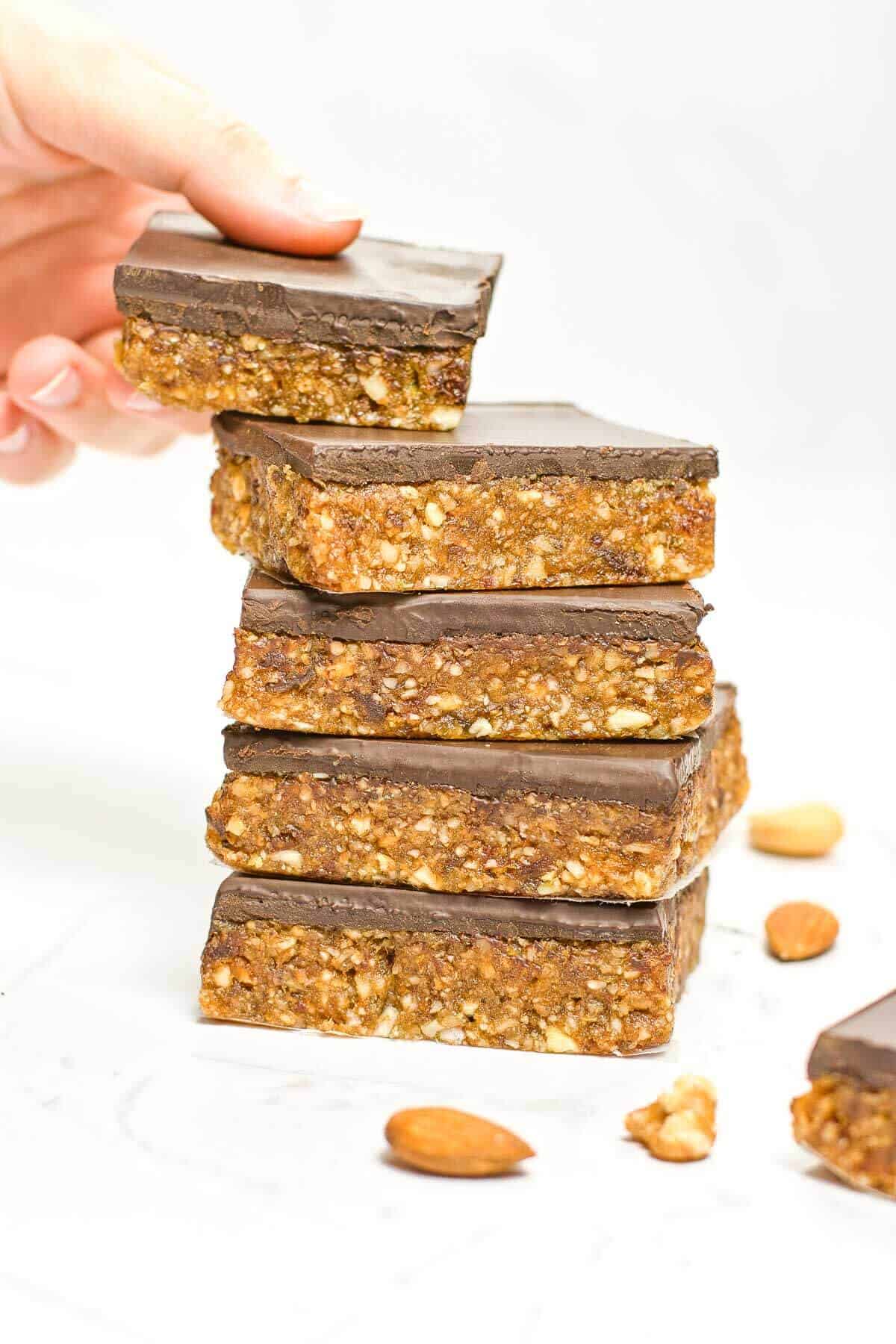
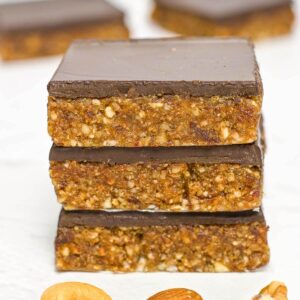
These easy no bake old fashioned homemade Date Nut Bars need just 4 ingredients, and you can make them in under 15 minutes. They’re sweet, chewy and nutty and chocolatey all in one and they have no added sugars. Perfect for morning snacks, after a workout, and to cure after dinner cravings.
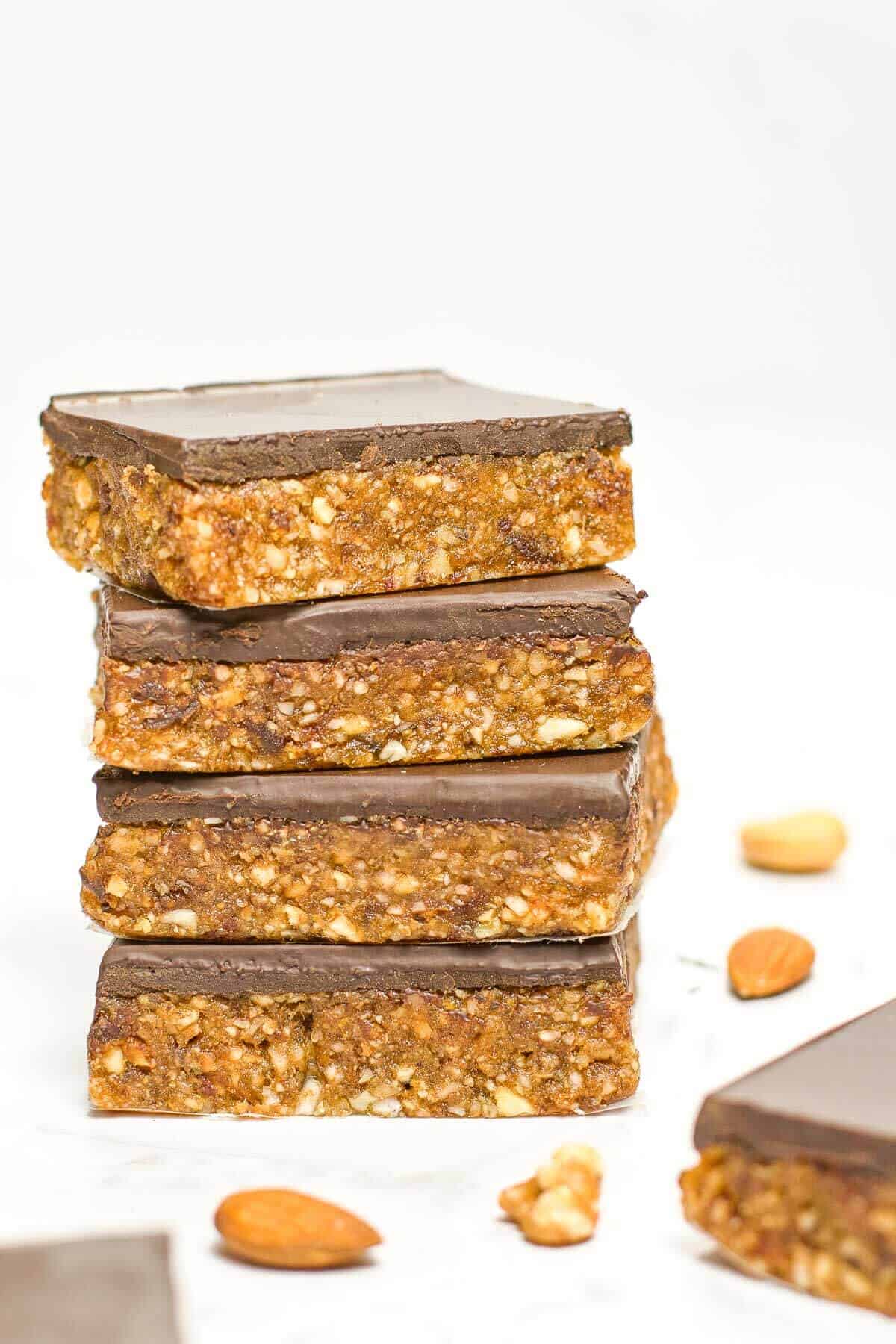
Recipe Highlights
- A quick and simple date sweetened dessert or snack
- No Honey or Maple Syrup
- High in fibre and protein from the dates and nuts
- Will keep you fuller for longer
- Way better for you than store bought nut bars
- They keep in the fridge for a week
- Easy to customise with extra add in’s
- Makes 12 generous sized bars
- They no bake and perfect for making in summer when you don’t want to turn the oven on
- They’re the ultimate portable snack
Ingredients
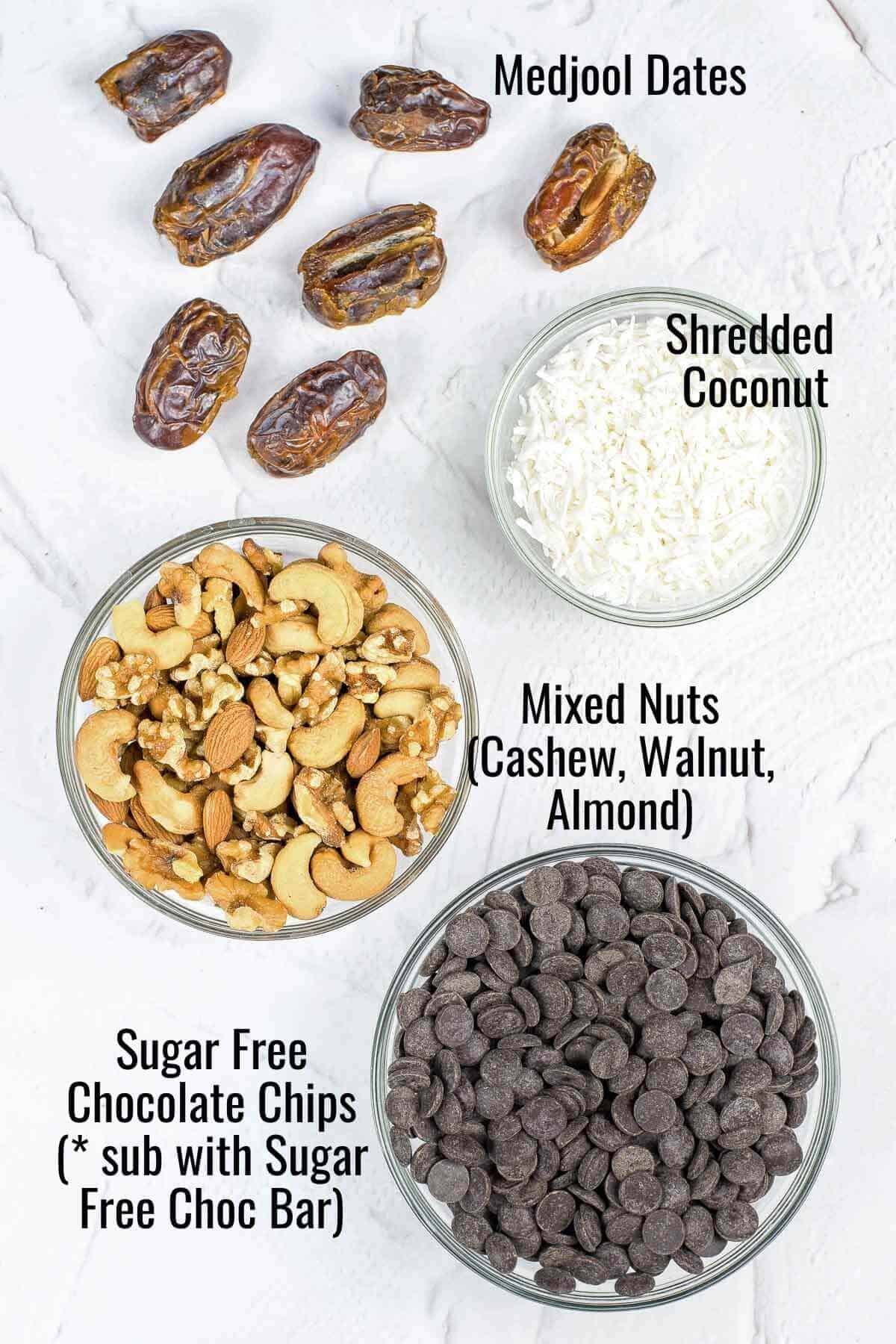
Date nut bars are a delicious and healthy snack made from dates, nuts, and coconut. The mixture is blitzed in a food processor and pressed into a pan, then no added sugar dark melted chocolate is poured over, covering the entire base. Then it’s chilled until firm and cut into bars. They’re easy to make, require no baking, and can be customized to your liking.
Yes, you can even eat them for breakfast along with these No Bake Chocolate Oat Bars and Healthy Choc Chip Granola Oat Bars. Or maybe check out these decadent Chocolate Coconut Bars for a more of a healthy after dinner dessert.
Ingredient Notes
Dates: Fresh, soft dates are the best for this recipe as they are easier to mix with the other ingredients (medjool dates are my favorite). If your dates are dry and hard, soak them in warm water for about 10 minutes to soften them.
Mixed Nuts: You can use any combination of nuts that you like, such as almonds, walnuts, pecans, cashews, etc. Nuts add crunch and flavor to the bars.
Chocolate: Look for sugar free dark chocolate chips, buttons or a bar in the supermarket baking aisle. There are many brands that now offer sugar free options and some of my favorite are Natvia and Noshu. If you can’t find sugar free chocolate the next best thing is a high-quality dark chocolate with at least 70% cocoa content for the best flavor.
Coconut: Opt for desiccated or shredded coconut. The bugger the coconut pieces the more texture the bars would have. Desicated coconut does tend to disappear a little too much for my linking so I use shredded.
How to Make
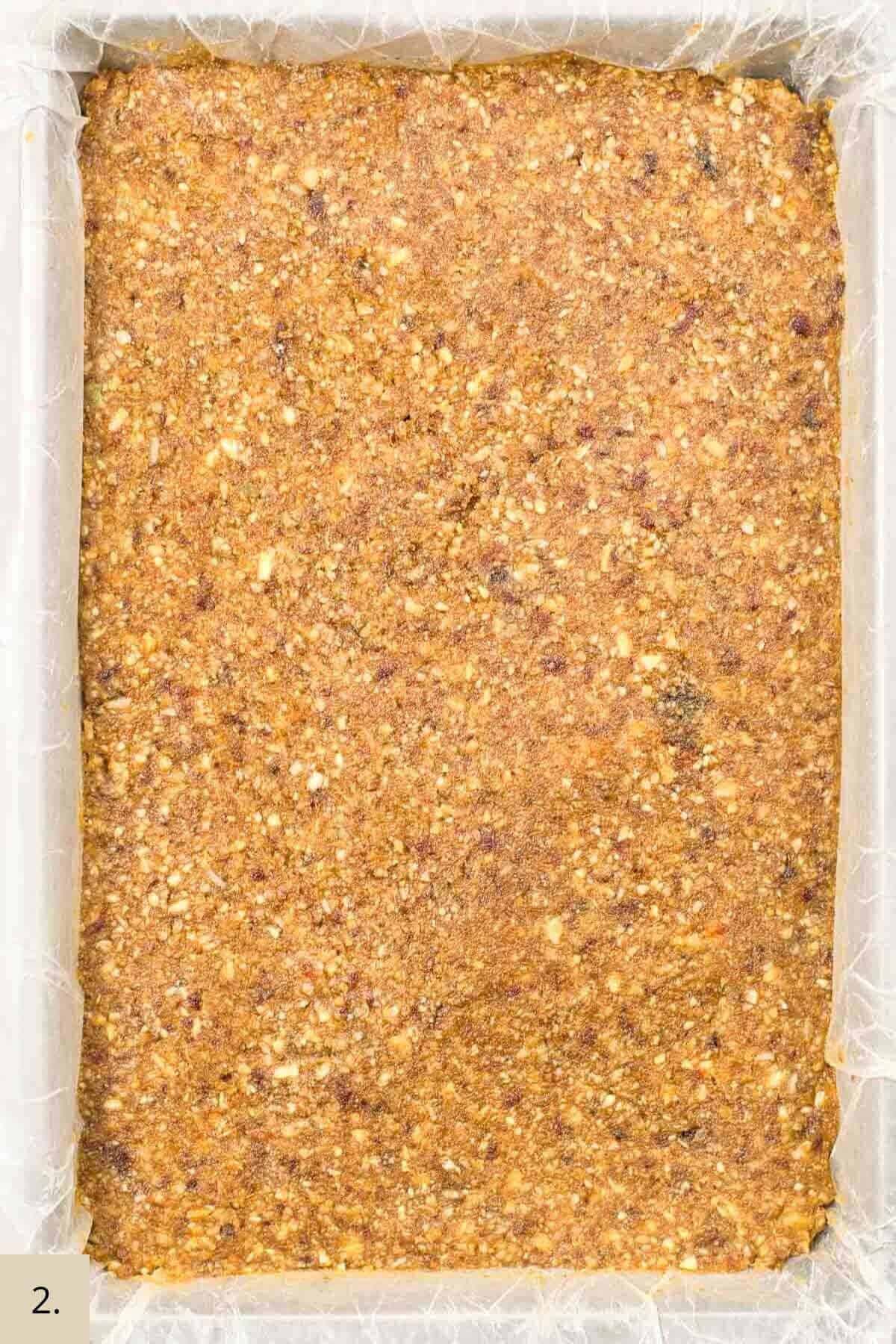
Make Base: Using a food processor, blend the pitted dates with the nuts and the shredded coconut until small pieces of nuts are visible and the mixture is sticky.
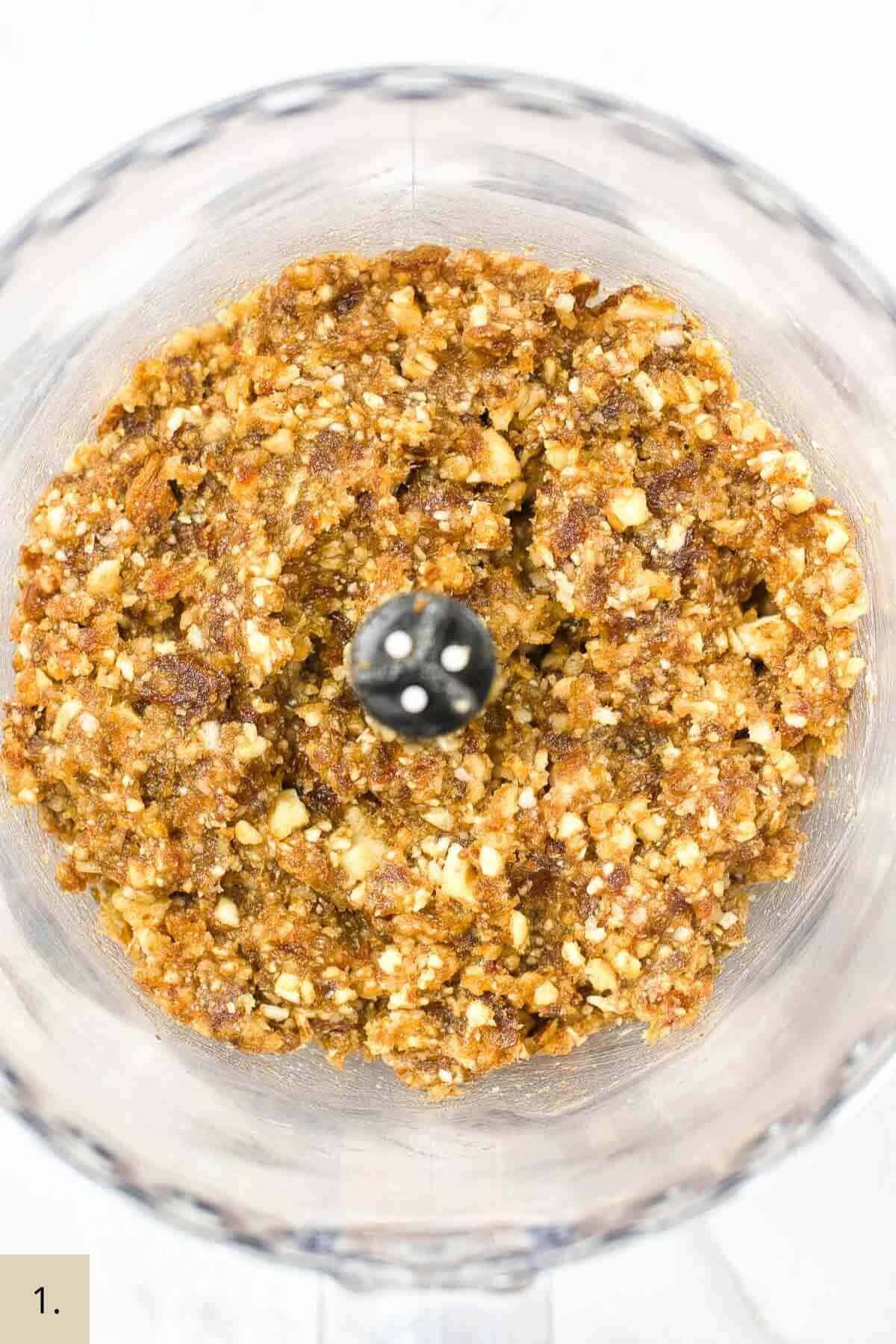
Transfer Base to Tin: Line a 7×11 loaf pan with parchment paper. Transfer the mixture to the prepared pan, using the base of a measuring cup or your hands to press evenly into all corners and flatten the surface.
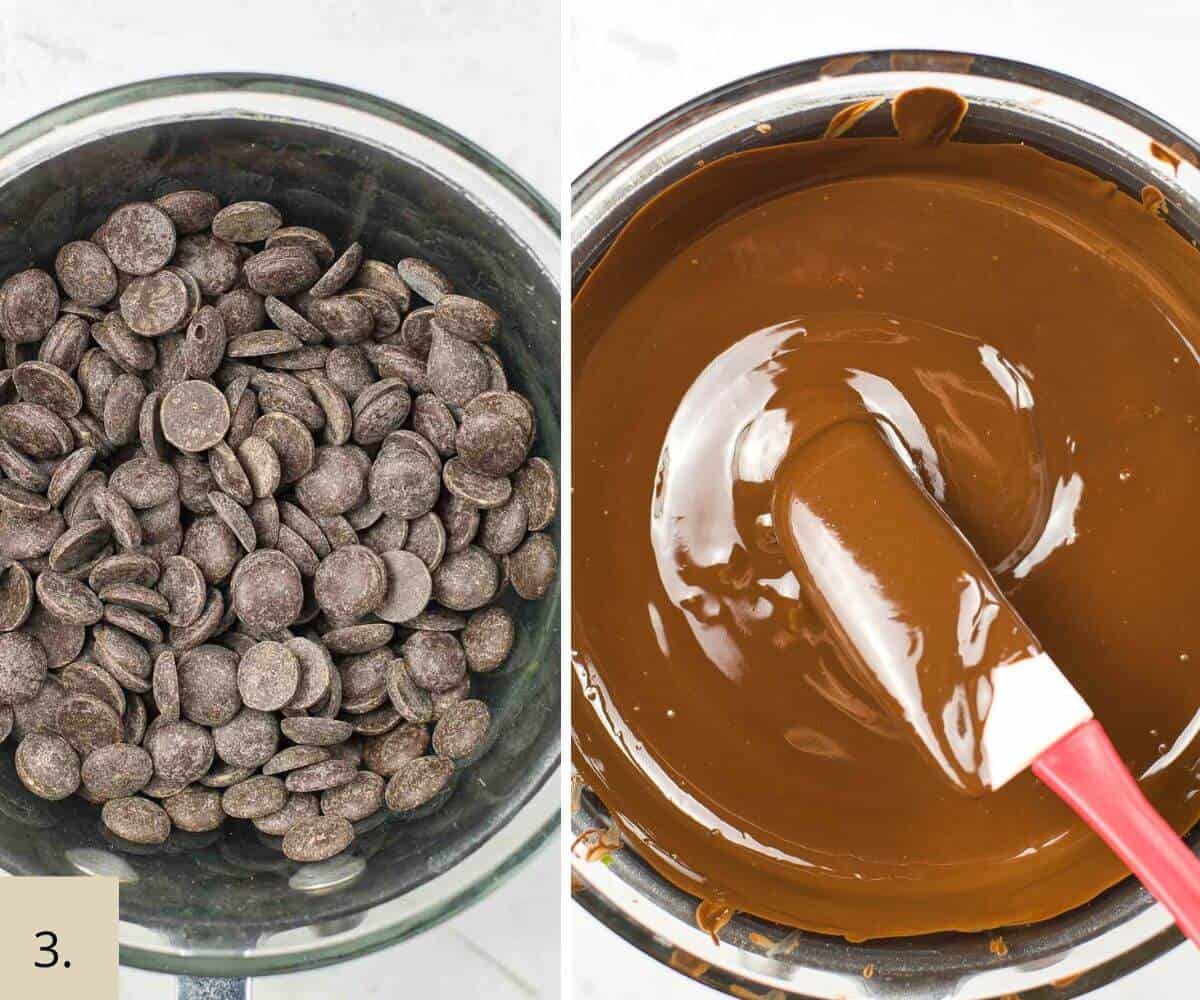
Melt Chocolate: For a smooth and creamy texture, melt the chocolate in a glass bowl over a pot of water on low heat on the stovetop. Stir frequently to avoid burning and to ensure the chocolate is fully melted.
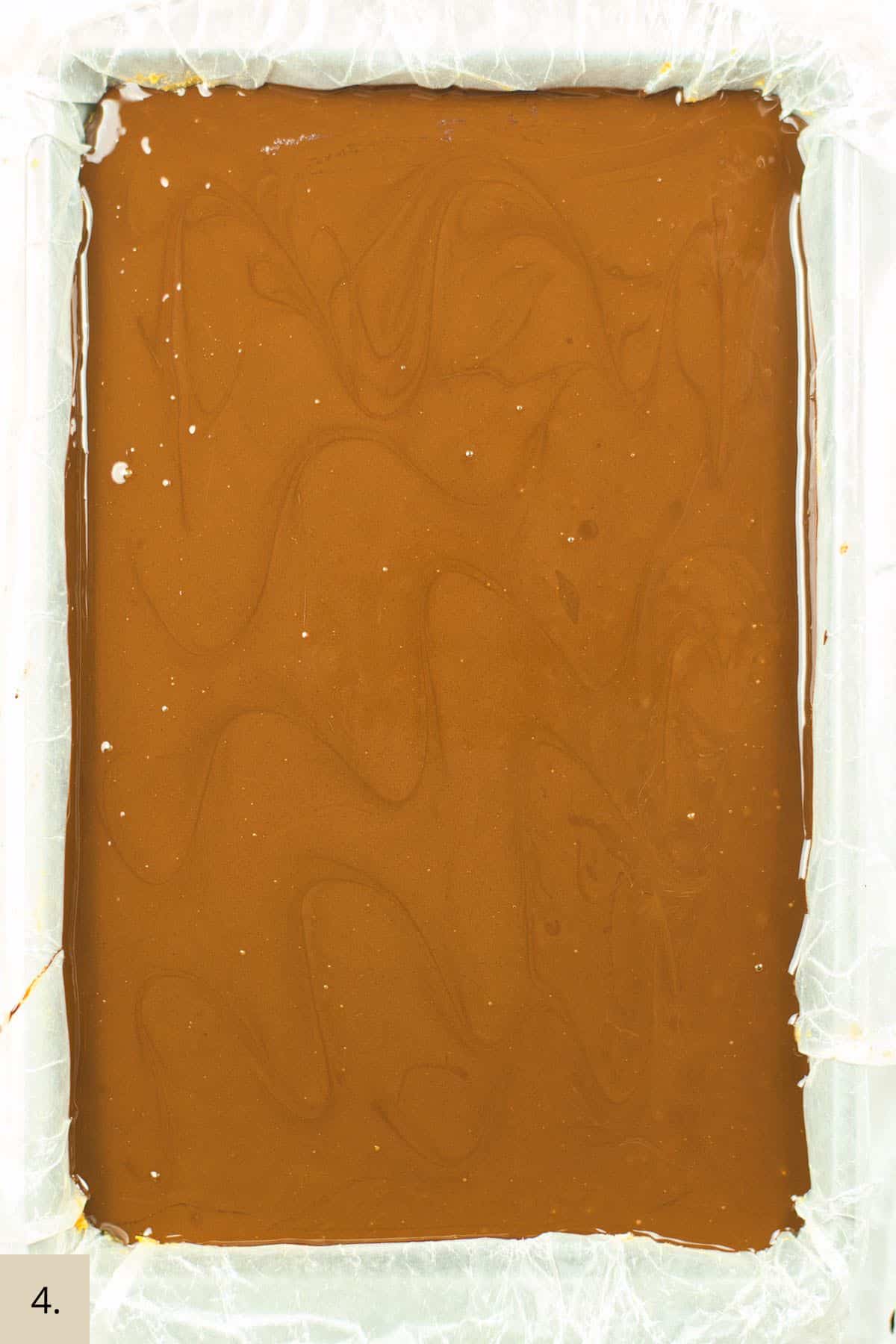
Pour Chocolate: Once melted, pour the chocolate over the bars and spread evenly to create a chocolate layer.
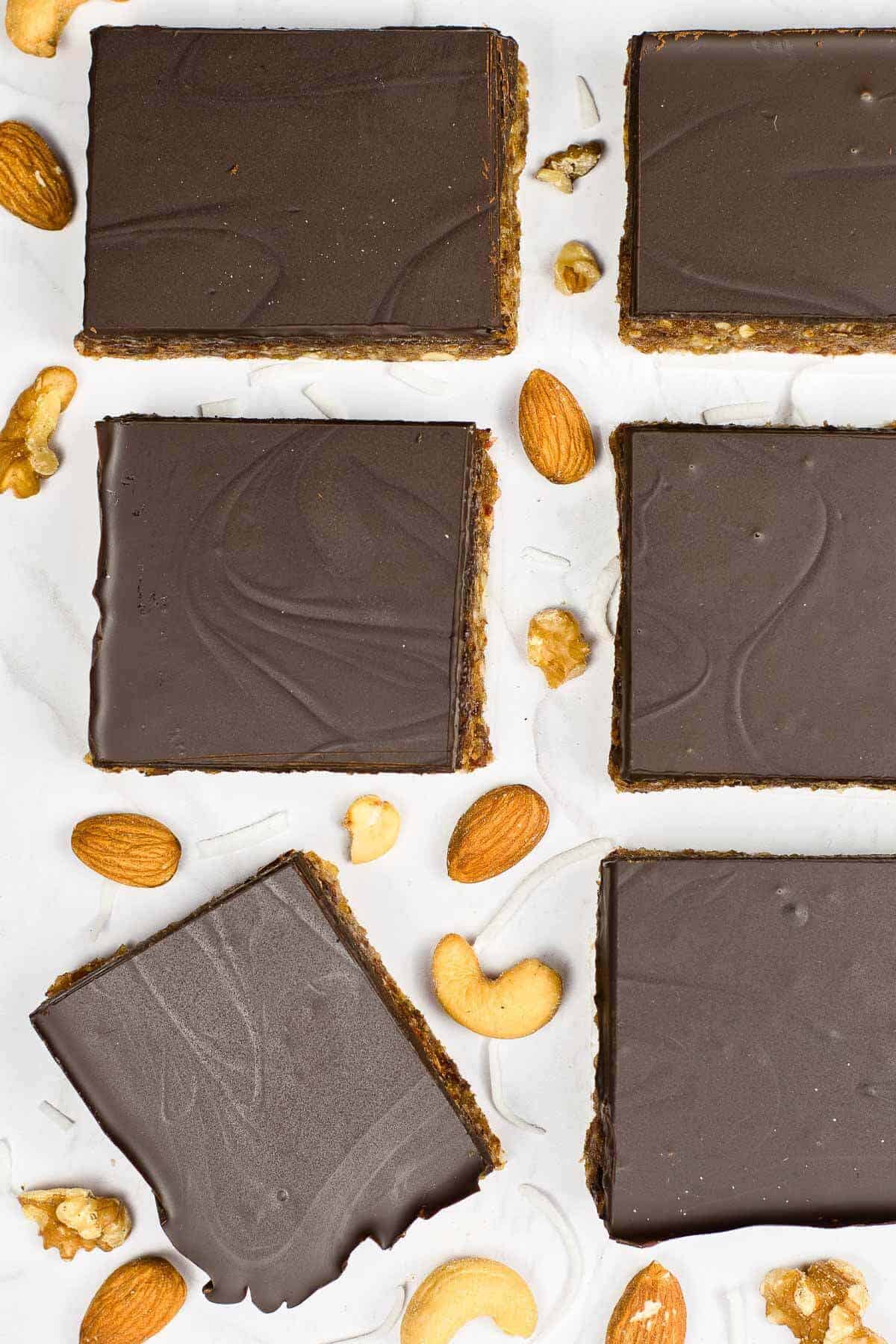
Chill: To set the chocolate layer, place the bars in the fridge for 60 minutes. Use a sharp knife to gently slice the bars into the desired size.
Optional Add In’s
- Spices: A quarter teaspoon of spices such as ground cinnamon, ground ginger, or mixed spice can add additional warmth.
- Seeds/berries: a tablespoon or two of pumpkin or sunflower seeds, or even goji berries will add extra texture.
- Sea Salt: add sea salt flakes sparingly at the end, on top of the chocolate just before chilling. Just a very small pinch scattered over the top should be enough.
- Nut Butter: Add a tablespoon of nut butter (slightly melted) and use a toothpick to swirl through the chocolate top before putting in the fridge to chill. Or you can try my other tried and true Chocolate Peanut Butter Bars recipe.
- Extra chocolate chips: for more texture and crunch scatter a couple of tablespoons of chocolate chips through the chocolate before chilling. Or add them to the melted chocolate before pouring onto the base if you want them completely covered in chocolate.
Recipe Tips
- Soak the dates: Soaking the dates in warm water for 5 minutes will help to soften them and make them easier to blend into a smooth paste.
- Nuts: Pulse the nuts in a food processor to chop them coarsely, but not too finely, to add texture to the bars.
- Adjust the sweetness: You can control the sweetness of your bars by adjusting the number of dates used. If you prefer sweeter bars, add more dates. If you prefer a less sweet taste, use fewer dates or add more nuts.
- Pressing the Base: Firmly press the mixture into the pan to ensure that the bars hold together well.
- Line the pan: Line your 7×11 inch baking pan with baking/parchment paper to prevent sticking and make it easier to remove the bars from the pan.
- Chill the bars: Once the bars are finished baking, let them cool completely in the pan before cutting them into squares. Chilling them in the refrigerator for at least 60 minutes will help the bars hold their shape and make them easier to slice.
- Cutting: for clean cutting lines, use a sharp knife dipped in hot water and wiped dry. Clean, rinse and run the knife under hot water in between each cut to achieve those perfectly smooth clean
Keeping the calories low
Nuts and dates can contain a lot of calories but that doesn’t mean they are bad or unhealthy. Nuts and dates contain healthy fats and fibre which keep us fuller for longer and help to keep sugar cravings at bay.
But if you are looking for a low calorie date nut bar, here are my suggestions for keeping it as low as possible while still keeping the texture and flavor.
- Use a sugar free dark chocolate as opposed to a regular dark chocolate as the sugar free version will have less calories
- Halve the amount of chocolate. Instead of covering the base entirely, drizzle the melted chocolate loosely over so that some of the base is left exposed.
- Reduce the size of the bars. Instead of slicing into 12 regular sized bars. Make 24 mini bars.
- Skip the add ins. The more you add to the bars the more calories they will have.
- Include almonds in the nut mix as they are lower in healthy fats. Although I wouldn’t use all almonds as that would not give it a lot of texture. A combination of 3 nuts is a good ratio.
Storage
This recipe for date nut bars will keep in the fridge in an air tight container for 7 days. I wouldn’t recommend freezing with the chocolate top.
Common Questions
My recipe for date nut bars makes 12 portions and each portion is 376 calories.
You can certainly use a sugar free milk chocolate for the top, however I find that a dark chocolate pairs better with the nuts and makes for a richer more indulgent treat.
Many store-bought date and nut bars can be high in added sugars or unhealthy fats, while homemade date nut bars are made with healthier ingredients, are naturally sweetened, and are nutrient-dense which means they will keep you fuller for longer and keep cravings at bay.
Date Nut Bars
Equipment
-
Food Processor
Ingredients
- 11-12 large Medjool Dates, (380 grams) – pitted and soaked for 5 minutes, drained
- 1½ cup Mixed Nuts, (255 grams)
- ¾ cup Shredded coconut, (100 grams)
- 1⅔ cup Sugar Free Dark Chocolate Chips, (300grams)
Instructions
-
Line a 7×11 inch loaf pan with parchment paper for easy removal, or use a silicone pan for a non-stick surface and place it on a baking sheet for stability.
Base
-
Using a food processor, blend the pitted dates with the nuts and the shredded coconut until small pieces of nuts are visible and the mixture is sticky.11-12 large Medjool Dates, (380 grams), 1½ cup Mixed Nuts, (255 grams), ¾ cup Shredded coconut, (100 grams)
-
Transfer the mixture to the prepared pan, using the base of a measuring cup or your hands to press evenly into all corners and flatten the surface.
Melting Chocolate
-
For a smooth and creamy texture, melt the chocolate in a glass bowl over a pot of water on low heat on the stovetop. Stir frequently to avoid burning and to ensure the chocolate is fully melted. (See tips below for alternative methods for melting chocolate)1⅔ cup Sugar Free Dark Chocolate Chips, (300grams)
-
Once melted, pour the chocolate over the bars and spread evenly to create a chocolate layer.
Chilling
-
To set the chocolate layer, place the bars in the fridge for 60 minutes.
-
Use a sharp knife to gently slice the bars into the desired size.
Notes
- Dates: Fresh, soft dates are the best for this recipe as they are easier to mix with the other ingredients.
- Soak the dates: Soaking the dates in warm water for 5 minutes will help to soften them and make them easier to blend into a smooth paste.
- Mix Nuts: You can use any combination of nuts that you like, such as almonds, walnuts, pecans, cashews, etc. Nuts add crunch and flavor to the snack. If you have any nut allergies, you can substitute with dried fruit or seeds.
- Sugar Free Dark Chocolate: Sugar free dark chocolate chips or a bar will both work. If using a bar, dice chocolate before melting.
- Can’t find sugar free chocolate? Look for a high-quality dark chocolate with at least 70% cocoa content for the best flavor. Dark chocolate provides a rich, intense flavor that pairs well with the sweetness of the dates and nuttiness of the mix nuts.
- Melting Chocolate: If you don’t have a glass bowl to go over a pot on the stove, chocolate chips can be melted in the pot alone, just be extra careful to keep watch on it so it doesn’t burn. Or, Chocolate can be melted in the microwave, on medium heat in 30 seconds bursts, stirring in between until “just” melted.
- Optional ingredients: You can also add spices, such as cinnamon or nutmeg, for extra flavor, or add a sprinkle of sea salt for a touch of saltiness.
- Adjust the sweetness: You can control the sweetness of your bars by adjusting the number of dates used. If you prefer sweeter bars, add more dates. If you prefer a less sweet taste, use fewer dates or add more nuts.
- Line the pan: Line your 7×11 inch baking pan with parchment paper to prevent sticking and make it easier to remove the bars from the pan.
- Chill the bars: Once the bars are finished baking, let them cool completely in the pan before cutting them into squares. Chilling them in the refrigerator for 60 minutes will help the bars hold their shape and make them easier to slice.
Nutrition
Note: Sugars contained in this recipe are from naturally occurring sugars in fruits, vegetables or other natural sweeteners.
]]>